
Talking Conservation with Farmers Inside the OWR
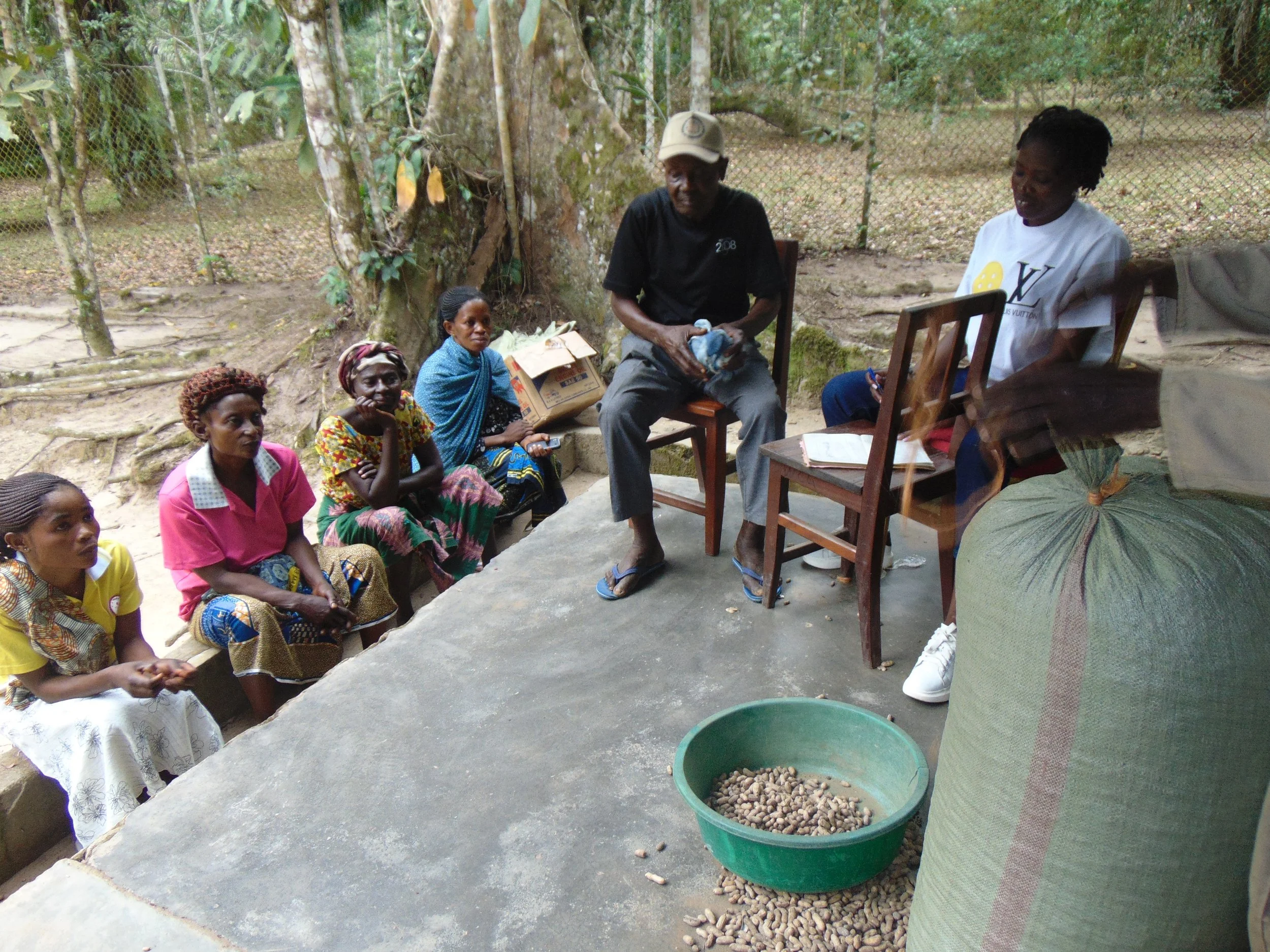
Protecting the Okapi Wildlife Reserve (OWR) takes more than boots on the ground. It takes conversations. Between February 26 and March 8, 2026, the OCP team held 19 meetings across 20 villages along National Road 4, reaching 942 participants, including 119 Mbuti Indigenous People, to address the growing concern of perennial crops, like cocoa and oil palm, being introduced into the reserve's agricultural zones. These crops, while valuable to farmers, pose a serious threat to the forest habitat that okapi and countless other species depend on, through deforestation, habitat fragmentation, and long-term land conversion.
The meetings brought together traditional chiefs, landowners, Bantu and Indigenous people for open discussion about both the legal framework protecting the OWR and the real consequences of unchecked agricultural expansion. Farmers also had a voice, sharing their own recommendations, from better demarcation of agricultural zones to increased seed distribution and stronger support for communities that are already doing things right. It was a reminder that conservation in the OWR is, at its heart, dependent on people.
