
Update on Okapi Conservation Efforts in Eastern Democratic Republic of Congo
Epulu, Democratic Republic of the Congo
Wildlife Conservation Global/Okapi Conservation Project (WCG/OCP) in partnership with the Institut Congolais pour la Conservation de la Nature (ICCN), and the Wildlife Conservation Society (WCS), announces an update on recent okapi conservation activities in the Okapi Wildlife Reserve (OWR).
Following strong community interest and overwhelming support for okapi returning to the Epulu Station, ICCN and its partners launched an initial capture campaign in early 2025 to return okapi to the Okapi Conservation and Education Center after a 13-year absence. That campaign successfully brought Tundana, a female okapi, back to Epulu for the first time in over a decade. Building on this success, a new capture campaign in early 2026 was launched, following extensive preparation, including traditional community ceremonies and comprehensive camera trap studies to identify suitable areas with stable okapi populations.
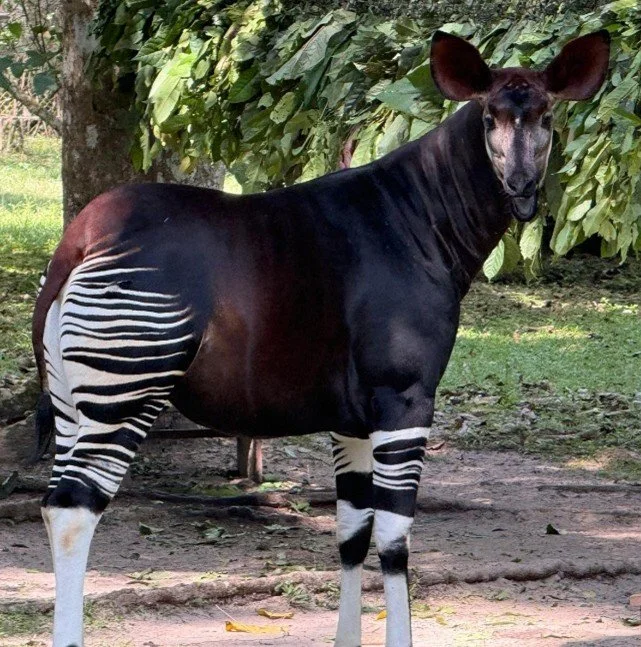
Tundana after one year at the Okapi Conservation and Education Center in Epulu
On January 23, 2026, a male okapi was successfully brought into human care at the Center and named “Pori” meaning “Forest” and a second male okapi was subsequently acquired and named “Ekpangi” meaning “Thank You”. Both animals are adapting well to their new environment in the quarantine enclosures.
The goals of this campaign are to revitalize the Epulu Station and the OWR by:
Reintroducing okapi to the Okapi Conservation and Education Center to strengthen connections between Congolese citizens and their national icon, fostering a renewed sense of national pride and stewardship essential to the species’ long-term protection.
Restoring Epulu’s role in managing okapi for citizens, dignitaries, and tourists to view in their natural environment.
Partnering with zoos globally as an international consortium working to protect the okapi in the wild.Supporting the goals of the International Union for Conservation of Nature’s (IUCN’s) global Okapi Conservation Strategy.
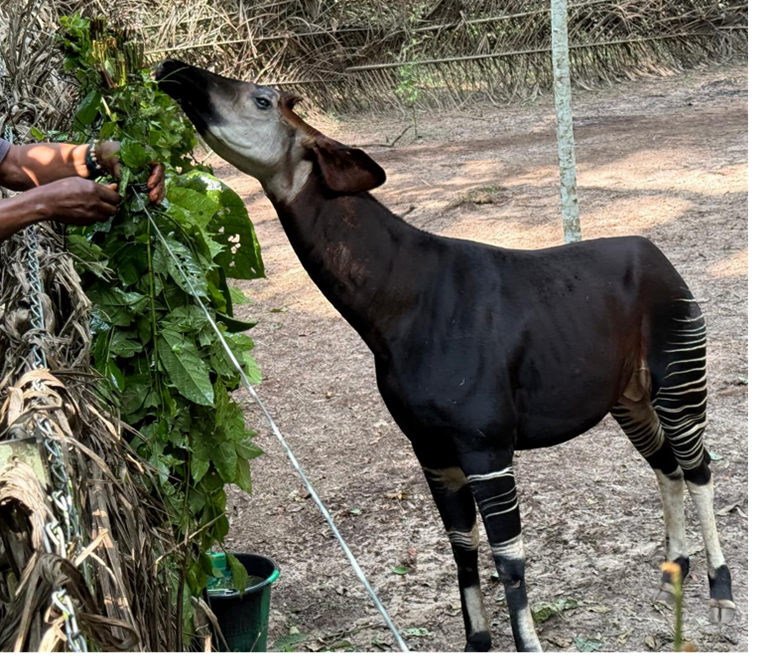
Ekpangi feeding as the keeper hangs the leaves .
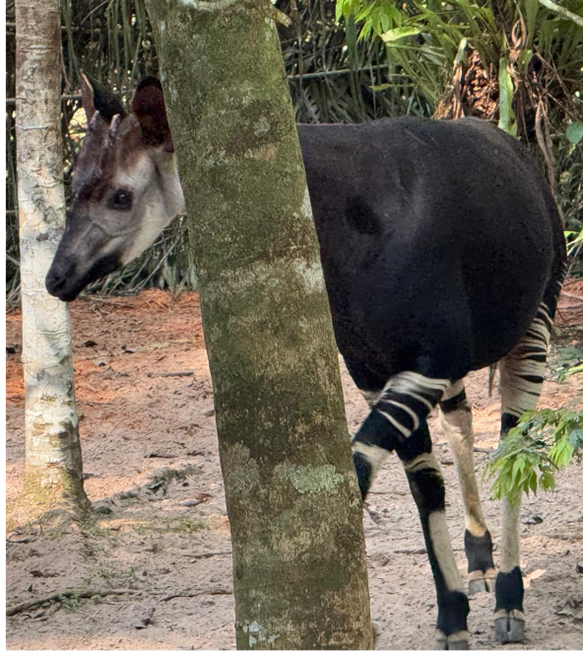
Pori likes to move through the trees.
“This initiative was based on strong government and community support for okapi conservation, and we are proud to see Tundana, Pori and Ekpangi thriving at the station as we work toward our goal of providing the citizens of DRC the opportunity to view okapi in their own country once again after a 13-year absence” states John Lukas, President and Founder of OCP. “It is critical that the people of DRC can learn about their national animal, the ghost of the forest, surrounded by the flora and fauna of their habitat, if they are expected to protect the ecosystem okapi call home. As a flagship species of the Ituri Forest, the okapi plays a critical role in protecting broader biodiversity, many threatened species- including chimpanzees and forest elephants- benefit from the protection and national recognition that okapi receives from both the government and people of the region.”
The presence of okapi at Epulu Station has historically played a crucial role in connecting local communities with conservation efforts in the OWR. Epulu is the only place where a live okapi can be viewed in its natural habitat in all of DRC, inspiring people and most importantly government officials to work together to protect okapi in the wild. This cultural and conservation heritage remains an important consideration in ICCN’s ongoing wildlife protection strategies.
ICCN and its partners remain committed to the conservation of okapi and the protection of their forest habitat, while prioritizing the safety and security of both wildlife and people during this extended period of regional instability.
For further information, please contact: info@okapiconservation.org
